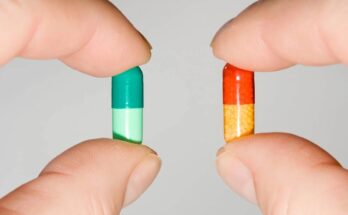
Drug tests are designed to detect specific drug classes that are commonly misused, not to survey everything a person may be taking. Standard screening panels focus on a short list of substances defined by regulation and clinical convention. Modafinil is a prescription wakefulness medication that is classified and used differently from the drugs these panels are built to identify.
What follows explains how drug tests are structured, what they are intended to detect, and how a medication like modafinil relates to that system.
What standard drug tests are designed to detect
Most routine drug testing relies on urine screening panels that look for predefined drug classes. In workplace and many clinical settings, these panels trace back to the federally established SAMHSA framework. That framework targets substances such as amphetamines, opioids, cocaine metabolites, cannabis, and phencyclidine.
These screens are class-based rather than medication-specific. A test reports whether markers associated with one of those classes are present above a cutoff level. Substances that fall outside the defined classes are not the focus of routine screening.
How screening and confirmation work
Initial drug screens are typically immunoassays. They provide a yes-or-no result for each drug class included in the panel. If a screening result is positive, a laboratory may perform confirmatory testing using more specific analytical methods to identify the compound responsible for the signal.
Confirmatory testing is not usually performed unless a screen is positive or a clinician orders targeted testing. The scope of what can be detected depends entirely on what the test is set up to look for.
Where modafinil fits pharmacologically
Modafinil is a prescription medication approved for conditions involving excessive sleepiness, such as narcolepsy, shift work sleep disorder, and obstructive sleep apnea. It is classified as a Schedule IV controlled substance in the United States.
Pharmacologically, modafinil is not described as an amphetamine, opioid, or other drug class commonly listed in routine screening panels. Prescribing references focus on its clinical uses, metabolism, interactions, and safety profile, rather than its behavior in drug testing contexts.
What routine drug tests can and cannot show
A negative drug test result means that none of the substances included in the testing panel were detected above the test’s threshold. It does not indicate the absence of all drugs or medications in the body.
Because screening panels are limited by design, medications that are not part of the targeted drug classes may be present without being reported. This limitation applies broadly across prescription drugs and is not unique to modafinil.
When testing may go beyond standard panels
Drug testing can be expanded or customized in certain settings, such as specialized clinical care, substance use treatment, or legal investigations. In those cases, laboratories may test for specific compounds if there is a defined reason to do so.
The ability to detect a substance depends on whether it is included in the ordered test, not on whether it is prescription or non-prescription.
What patients prescribed modafinil should understand about testing
Routine drug tests are not general medication inventories. They are narrow tools designed to identify particular drug classes associated with misuse. Modafinil’s approved uses and classification place it outside the primary focus of standard screening panels, but testing practices vary by context and purpose.
For any situation involving formal testing, questions about disclosure and test scope are best addressed with the testing authority or clinician involved.
Sources
- Greenblatt, K., & Adams, N. (2023). Modafinil. In StatPearls. StatPearls Publishing. https://www.ncbi.nlm.nih.gov/books/NBK531476/
- U.S. Food and Drug Administration. (2015). PROVIGIL® (modafinil) tablets, for oral use, C-IV [Prescribing information]. U.S. Department of Health and Human Services. https://www.accessdata.fda.gov/drugsatfda_docs/label/2015/020717s037s038lbl.pdf
- Hadland, S. E., & Levy, S. (2016). Objective testing: Urine and other drug tests. Child and Adolescent Psychiatric Clinics of North America, 25(3), 549–565. https://doi.org/10.1016/j.chc.2016.02.005